A single net can encircle an area the size of several stadiums, take everything inside it, and sort out what sells afterwards.
Fishing gear is not one category. An encircling net, a baited line and a towed or set net injure animals by different mechanisms and over very different lengths of time. Each of them also takes animals it was not aiming for, which is why the differences between them matter more than the shared word.
About 3 min · 3 steps · you control the pace
Use ← and → to move, Esc to exit
1 The school encircled
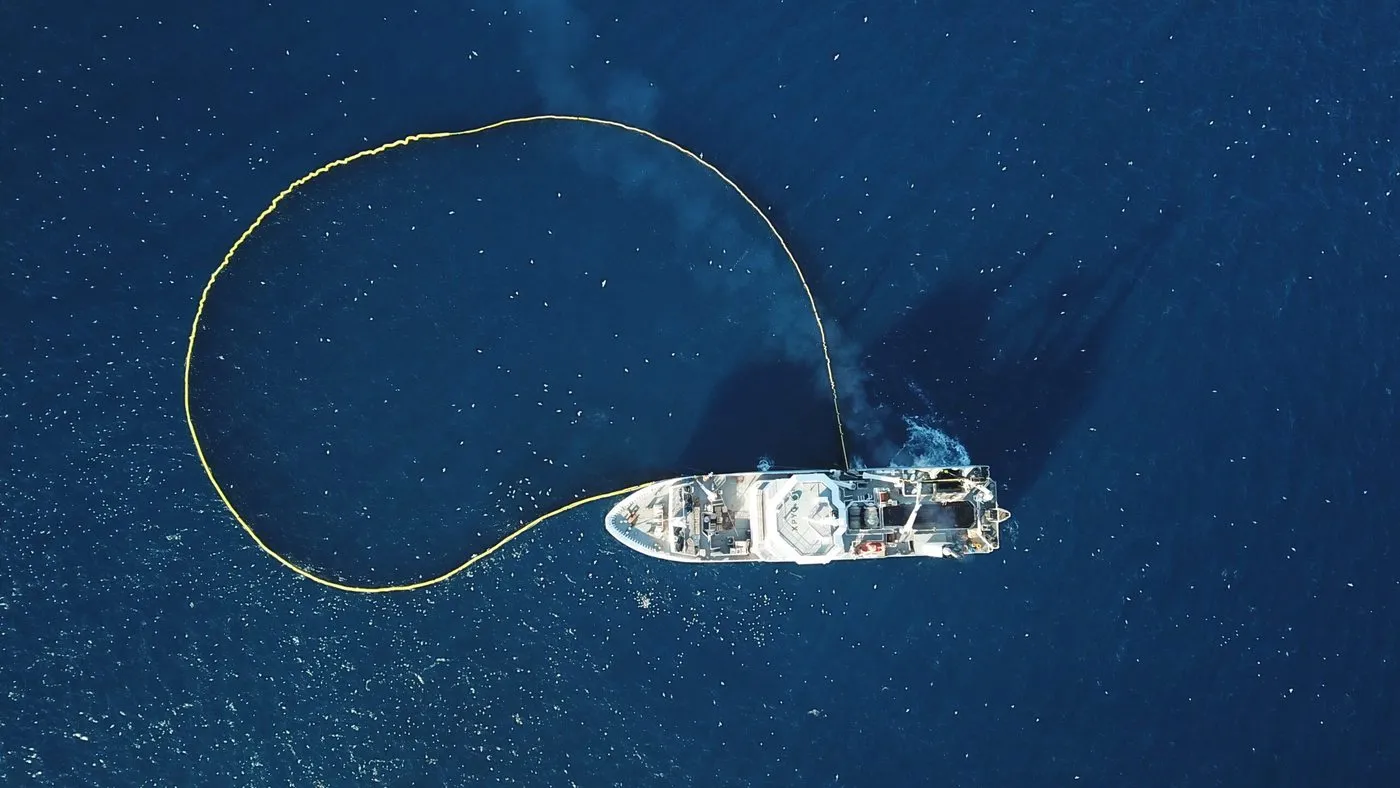
Purse-Seine Net
A vessel rings a school with a wall of net and draws the bottom shut, then concentrates the catch alongside the hull, where crowding, compression, scale loss, exhaustion and air exposure come before any killing.
What this is
A vessel encircles a school with a long wall of net, then draws the bottom shut like a purse. The net is hauled in until the fish are packed together against the side of the boat.
Why the system uses it
One set takes a whole school, which is why the gear is used so widely for tuna, sardine, mackerel, and other pelagic fish. Volume per set is the whole logic of the method.
What it costs the animal
Fish are crowded and compressed against each other and the net, lose scales, and exhaust themselves, then face air exposure and a delayed death after capture. Animals the boat was not fishing for come up in the same net.
Worth being precise about
A purse seine does not scrape the seabed the way a bottom trawl does. How much bycatch a set takes varies with the target species, the location, and whether fish-aggregating devices are used.
A mainline sets many baited hooks and leaves them in the water; hooked animals stay injured, exhausted or unable to breathe normally until the line is hauled.
What this is
A mainline, sometimes kilometres long, trails branch lines tipped with baited hooks near the surface or along the seabed. An animal that takes the bait is held by the hook until the crew hauls the line in.
Why the system uses it
Longlines reach valuable species across large stretches of water — tuna, swordfish, halibut, cod — and drag across less seabed than trawling, which is the argument made for them.
What it costs the animal
Hooked animals stay on the line until retrieval: injured, exhausted, or unable to breathe normally. Seabirds, turtles, sharks and fish the boat was not fishing for are caught on the same hooks.
Worth being precise about
Circle hooks, weighted lines, night setting, bird-scaring lines, fishing depth and faster retrieval reduce some bycatch, and results vary widely between fisheries. None of it changes what the hook does to the animals the gear is aimed at.
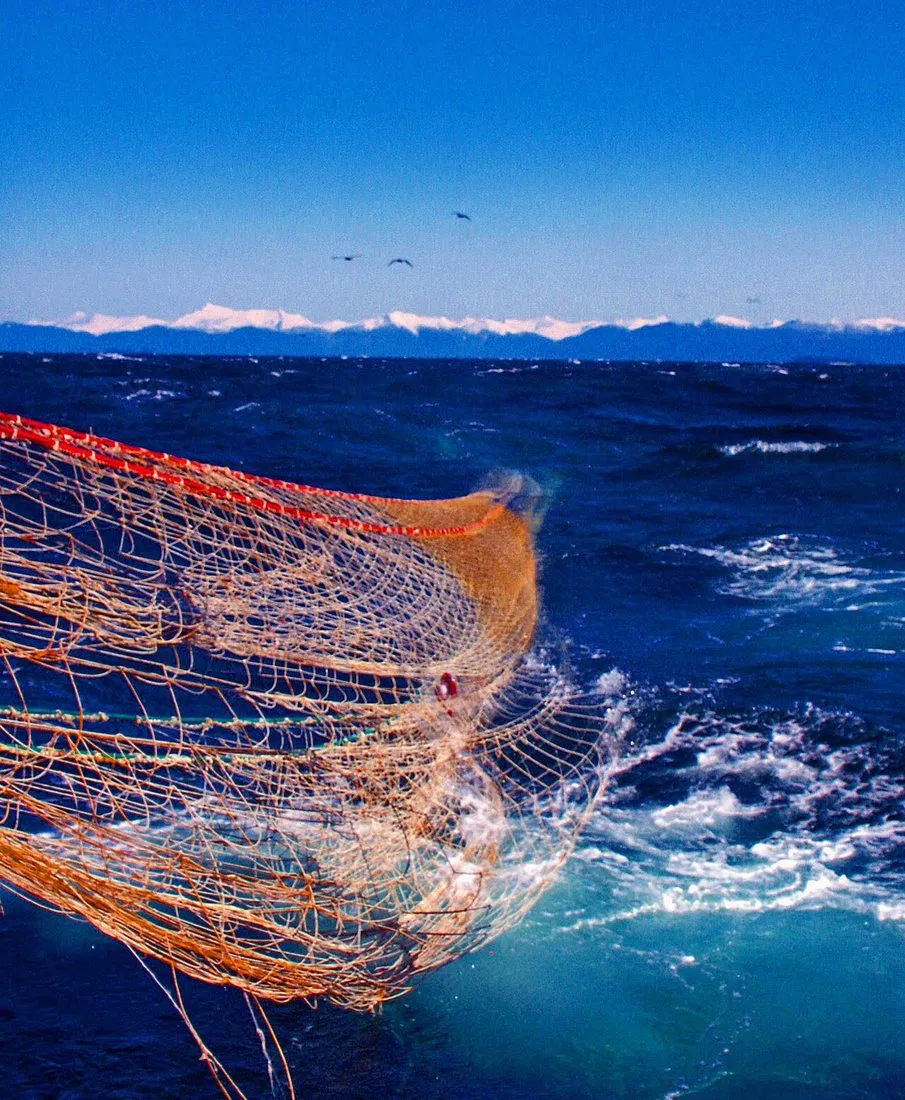
Trawls are dragged through the water or along the seabed while gillnets catch by entanglement, and animals struggle, are compressed, suffocate, or are taken by predators in the net.
What this is
A trawl is a large net towed through open water or dragged along the seabed. A gillnet hangs in the water and catches animals by entangling them.
Why the system uses it
These nets exist to take fish in bulk rather than one animal at a time. Volume is the point, and everything else the net encloses comes up with the catch.
What it costs the animal
Animals struggle for long periods, are compressed against the net and each other, and die of injury, suffocation, or predation while still trapped.
Worth being precise about
Trawls, gillnets, and other nets catch animals by different mechanics, and the scale of bycatch and seabed damage varies strongly by gear type and fishery. This entry separates what happens to the animal in the net from the wider ecosystem effects.
You just walked through 3 stages behind one plate.
Purse seines, longlines and trawls do not select. What cannot be sold is called bycatch — turtles, sharks, seabirds, dolphins — and it goes back over the side, mostly dead.
Impact depends on target species, location, depth, soak time, mitigation, vessel practice and management. Circle hooks, weighted lines, night setting, bird-scaring lines and faster retrieval reduce some bycatch, and purse seines do not scrape the seabed the way bottom trawls do.