Restraint tubes, metabolic cages and primate enclosures are the everyday furniture of a testing life.
Every device here has a defensible purpose: efficient dosing, safe access, accurate measurement, secure containment. Put in order, they sketch the ordinary texture of a research life, which is brief handling, immobilisation, solitary measurement, and an enclosure that does not change. The question each step raises is whether the procedure was justified, shortened, refined, and whether it was needed at all.
About 4 min · 4 steps · you control the pace
Use ← and → to move, Esc to exit
1 Repeated dosing
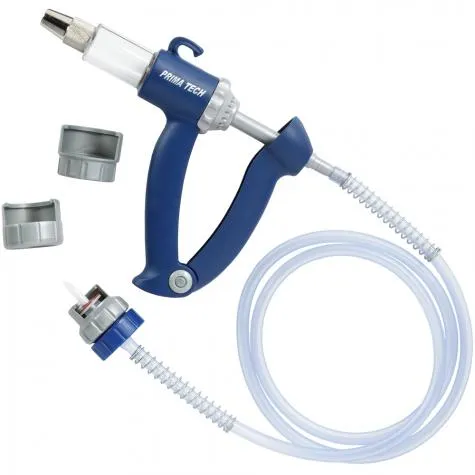
Repeating Livestock Syringe
A calibrated, self-refilling syringe delivers dose after dose across many animals, with needle hygiene between them deciding whether infection travels with it.
What this is
A calibrated syringe that reloads itself after every dose, so one operator can inject animal after animal without stopping to refill.
Why the system uses it
Vaccinating and medicating at herd scale has to be fast. The tool exists to keep the throughput up across large numbers of animals.
What it costs the animal
Each animal is restrained and pierced. The fear and the sting are brief; the serious risk is infection carried between animals when needles are reused or hygiene slips, not the repeating mechanism itself.
Worth being precise about
This is ordinary veterinary equipment, and much of what passes through it prevents or treats disease. Dose, restraint, needle hygiene, maintenance, and technique decide the outcome.
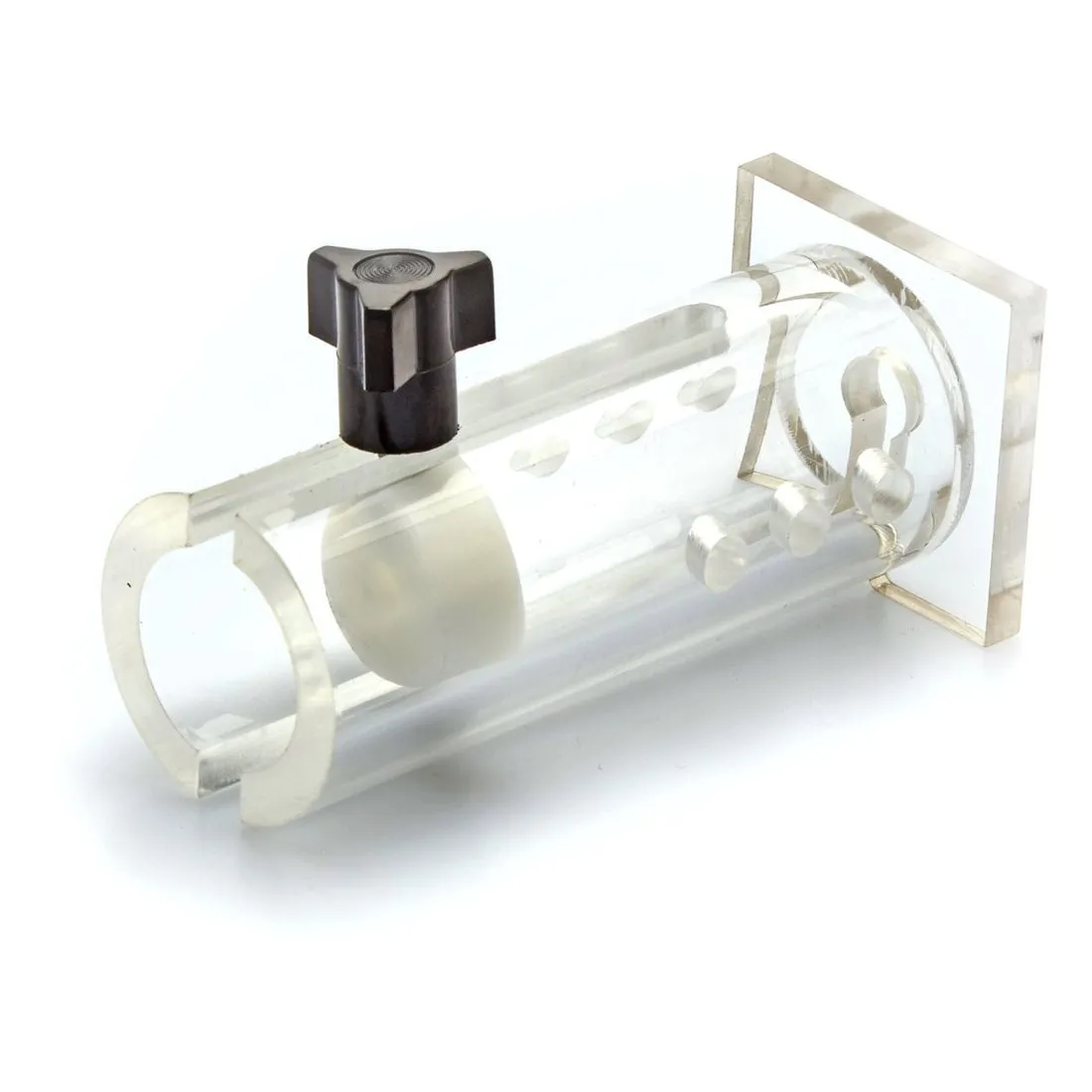
A clear tube holds a mouse or rat still so a needle, blood draw, imaging device or tail procedure can reach it; forced entry, poor fit, heat and repetition turn a brief hold into marked stress.
What this is
A clear tube or adjustable holder confines a mouse or rat so it cannot move. Openings give the handler access for injections, blood collection, imaging, dosing or tail procedures.
Why the system uses it
A restrained animal cannot twist, bite or flee, so the handler is protected and the procedure is precise. It is used where the work cannot be done on a freely moving animal.
What it costs the animal
An animal forced into a tube cannot turn, retreat or hide. Poor fit, heat, prolonged confinement and repeated use produce marked stress and injury.
Worth being precise about
The tube is not abusive in itself: a well-fitted tube, used briefly on a habituated animal, is a different experience from forced entry and repeated restraint. Refinement means training, gentle handling, correct sizing, the shortest feasible duration, monitoring, and anaesthesia or another technique where one exists.
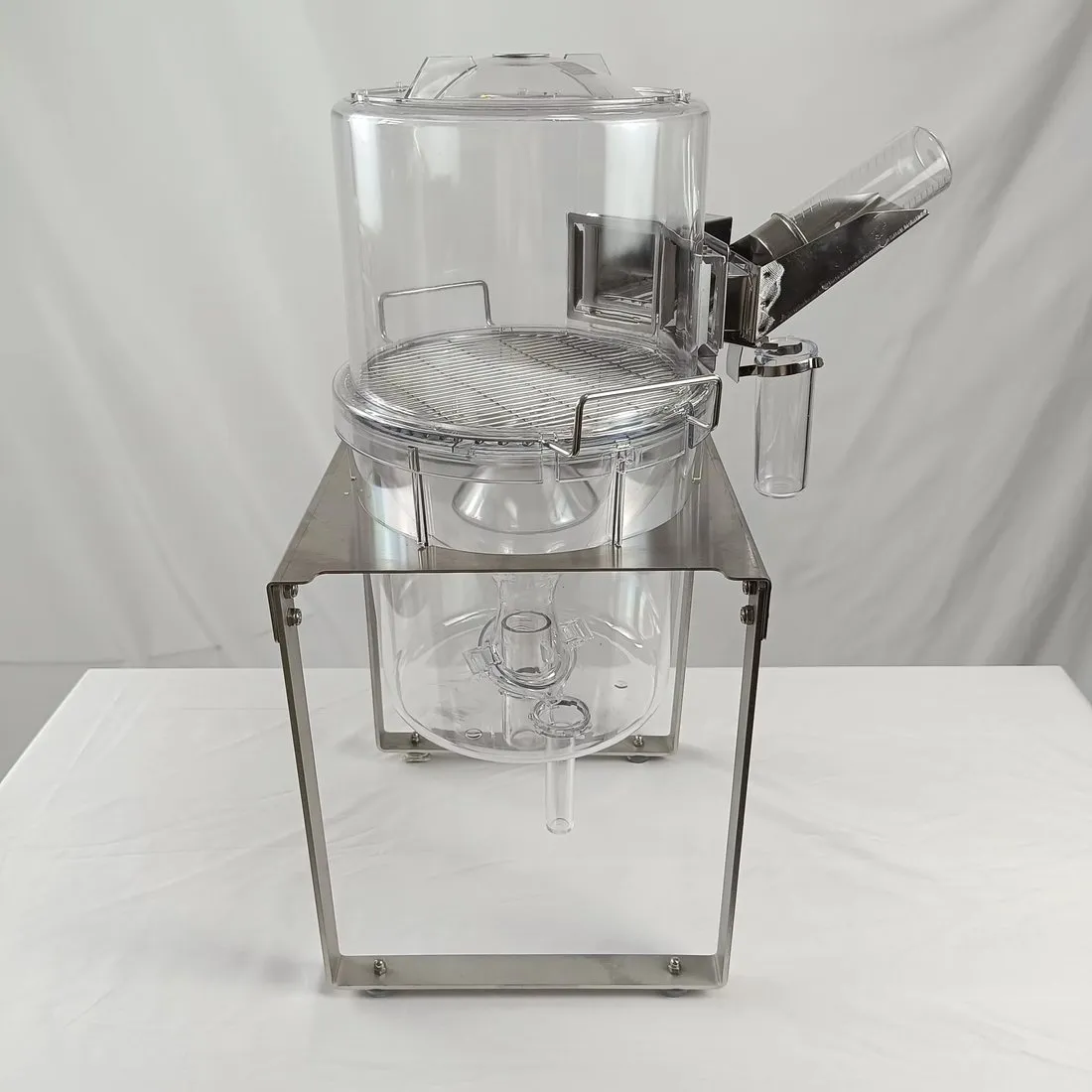
A metabolic cage isolates one animal on a grid floor and separates urine from faeces so intake and output can be measured precisely: barren, gridded and solitary by design.
What this is
A cage holds a single animal on a grid floor above a system that separates urine from faeces. Food, water and everything the animal passes are measured.
Why the system uses it
Balance, pharmacology, toxicology, nutrition and renal studies need clean per-animal figures. Getting them means housing the animal alone, on a grid, over a collection funnel.
What it costs the animal
The animal stands on bare grid in a small empty space, alone, with little nesting material and little room to move or hold a normal posture. Stress and discomfort follow, and worsen the longer it is kept there.
Worth being precise about
The cage does a measuring job that ordinary housing cannot. Refinement means justifying each use, keeping it short, improving floors and enrichment where the measurements allow, and monitoring every animal.
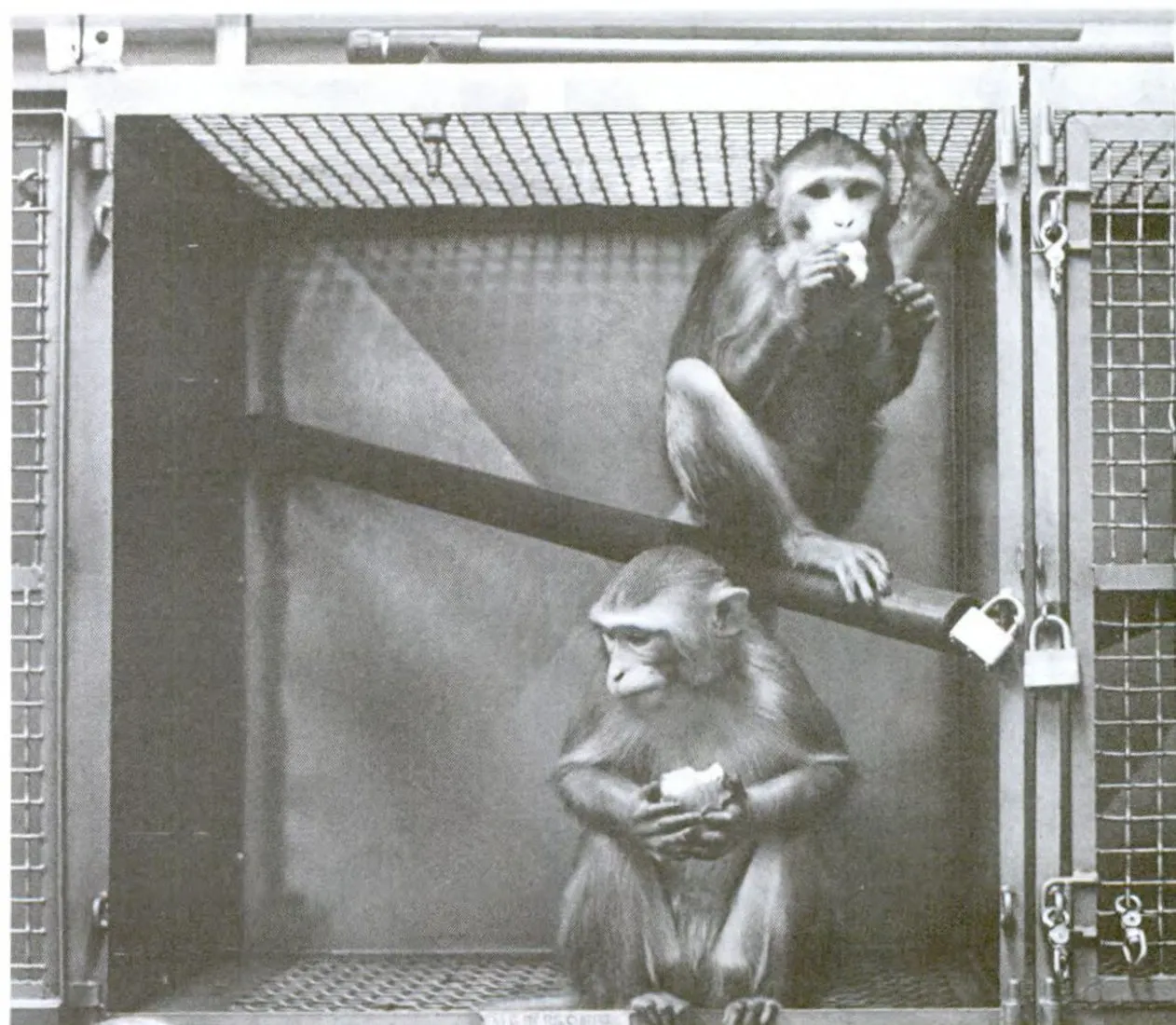
A steel enclosure holds a macaque or other primate for observation, feeding, separation and controlled access, and too little space, too little height and repeated isolation produce fear and abnormal behaviour.
What this is
A secure steel enclosure holds a primate behind bars. It lets staff observe, feed, clean, separate individuals and take controlled hold of the animal for research or veterinary procedures.
Why the system uses it
Facilities use these cages singly, joined into runs, or inside social-housing rooms, depending on the protocol and the species. Caging keeps every animal identifiable, reachable and separable on demand.
What it costs the animal
Where space is tight, height and complexity are limited, foraging opportunities are few, and animals are housed alone or repeatedly separated from each other, the result is fear, stereotypies, other abnormal behaviour and damaged social lives.
Worth being precise about
The cage is also how a sick primate is treated and how handlers stay safe. Group housing, compatible companions, enrichment, training, a more complex enclosure and less isolation change the animal's welfare substantially.
You just walked through 4 stages behind one product.
Confinement, isolation and barren space are not incidental to the science — they are how the data is kept clean. Cruelty-free certification exists precisely because this is avoidable.
Facilities, protocols, housing standards and oversight differ enormously. Replacement, reduction and refinement are the framework used to reduce animal use and suffering, and refinements such as habituation, correct sizing, shorter restraint and group housing change outcomes materially.