A whip, a muzzle, a bullhook, a concrete tank. Each is defensible on its own; together they describe a life.
Racing and display run on a mixture of genuine safety equipment, training aids and enclosures, and they are not equivalent. Sorting them apart matters, because treating every visible object as equally harmful makes the serious cases easier to wave away. The range here runs from a muzzle that protects to a tank that sets the outer limit of everything an animal can do.
About 4 min · 4 steps · you control the pace
Use ← and → to move, Esc to exit
1 Struck to run faster
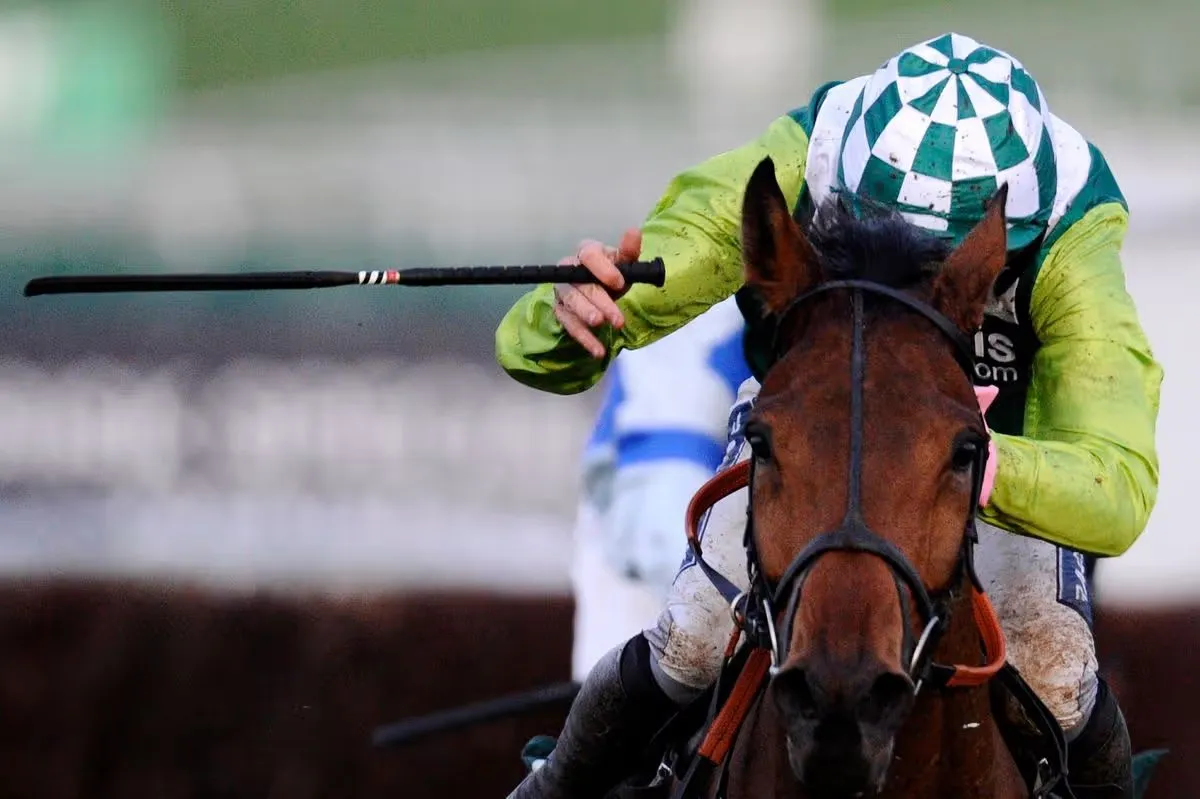
Horse-Racing Whip
A short padded whip is carried to cue, correct and urge a horse under regulated limits, and the strikes are aversive stimuli whose force, frequency and use on a tired horse are the contested point.
What this is
A short padded whip carried in the jockey's hand. It is used to give directional cues, to correct the horse, and to strike it to make it run harder during a race.
Why the system uses it
Racing authorities permit the whip and regulate it — where on the horse it may land, how it may be used, how often — and penalise riders who breach the limits.
What it costs the animal
A whip strike is an aversive stimulus: the horse moves to get away from it. Depending on force, placement, repetition, padding and enforcement it causes pain and leaves marks on the skin, and striking horses that are already exhausted is the most contested use of all.
Worth being precise about
Supporters point to communication and to emergency safety. The welfare argument is about necessity, force and frequency, and about whether the incentive to win erodes the limits in practice.
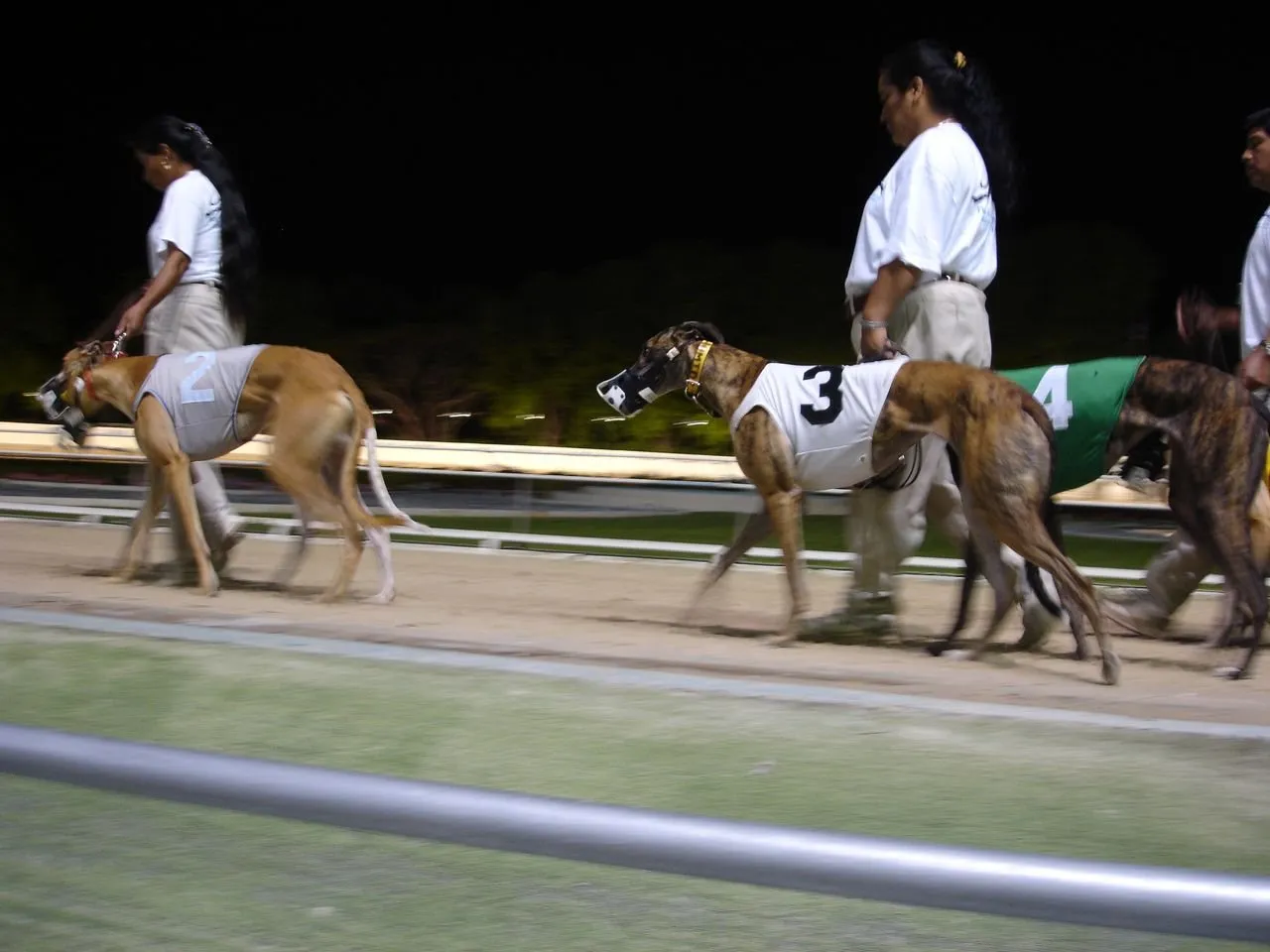
A lightweight basket muzzle lowers biting risk in close running and helps officials read positions; fitted correctly and worn briefly, it is not where the harm in this sport sits.
What this is
A lightweight basket muzzle is fitted over the dog's jaws before a race. It stops dogs biting each other while running in a tight pack, and helps officials tell the runners apart at the finish.
Why the system uses it
Muzzles are standard kit in organised greyhound racing, worn for a limited period around the race itself. They remove a risk the racing format creates without altering the format.
What it costs the animal
A correctly fitted muzzle worn briefly does little to the dog. A damaged or badly fitting muzzle, excessive time in it, heat, or anything that obstructs panting causes real harm.
Worth being precise about
The muzzle is not where the harm in greyhound racing sits. Track injuries, kennelling, transport, training methods and what becomes of the dogs afterwards are the substance of the case.
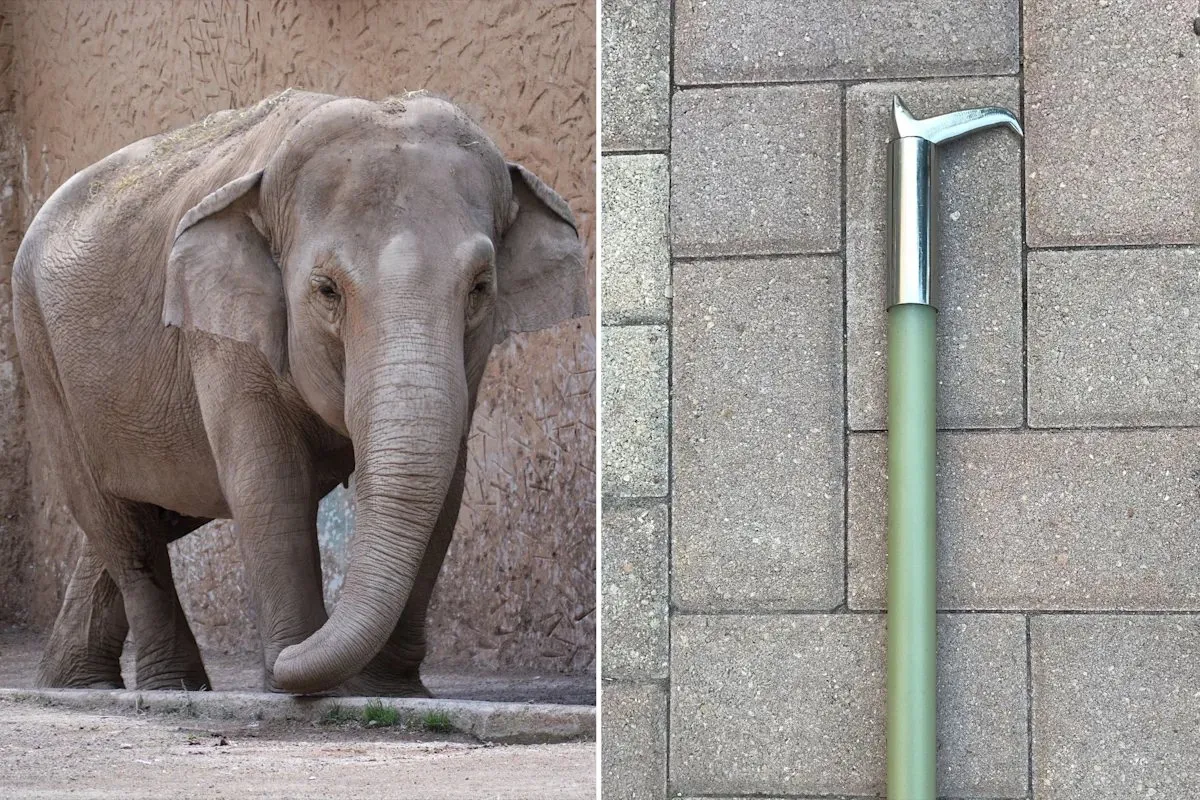
A handle with a pointed metal hook guides, pulls and controls an elephant at close quarters, and after coercive training the sight of it can do the work on its own.
What this is
A handle tipped with a pointed metal hook. The handler uses the point and the hook to prod, guide, pull and control an elephant at close range.
Why the system uses it
It has been used in circuses, tourism, logging and free-contact elephant management — wherever a person needs immediate physical control over an animal they could never overpower.
What it costs the animal
The hook and its point inflict pain and injury. After coercive training the tool does not need to be used: an elephant that sees it carried already knows what it does, and forceful use is difficult for an onlooker to detect.
Worth being precise about
Handlers draw a distinction between light tactile cueing and punishment. Many institutions have moved to protected contact and reward-based training, which removes bullhook control altogether.
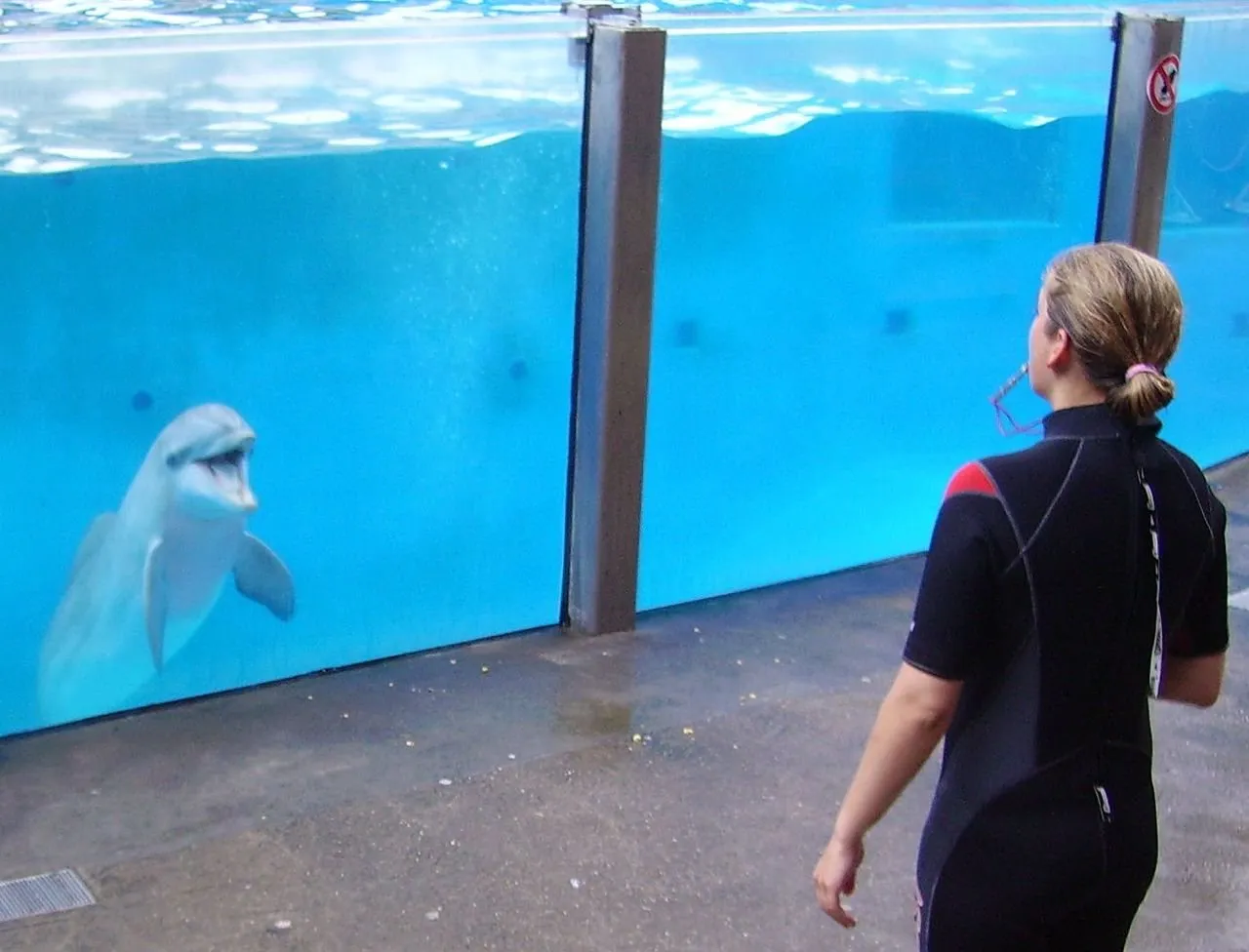
A purpose-built pool holds cetaceans for shows, breeding and viewing, cutting travel, diving, foraging, acoustic environment and choice of companions down to what fits inside the walls.
What this is
A purpose-built pool confines dolphins and other cetaceans within sight of an audience. The same water is where they are trained, perform, breed and receive veterinary care.
Why the system uses it
A dolphinarium combines animal housing, show schedules, food-reward training, visitor education and paid entertainment. The animals are the exhibit and the tank is the venue.
What it costs the animal
Against the ranges these animals cover in the wild, a tank cuts travel, diving, foraging and the acoustic world they live by down to a fraction of themselves, and leaves the animal almost no say in which others it is held with. Abnormal behaviour and chronic stress are the core welfare problems.
Worth being precise about
Facility size, enrichment, social management, rescue status and quality of care vary between operators. The unresolved question is whether captivity can meet a cetacean's needs even where a facility is run well.
You just walked through 4 stages behind one ticket.
A dolphin in a display tank has lost travel, depth, social choice and its acoustic world. A ticket is the demand signal that keeps the tank filled.
Rules, facilities and care standards differ, and many institutions have moved to protected contact and reward-based training that removes bullhook use. The wider concerns in racing, including injuries, kennelling, transport, training methods and what happens after a career ends, are not visible in any single tool.