It spent its whole life inside a net, in a crowd, in water it could not leave.
Open water is not the same as open space. The cage sets the density, the density shapes the disease pressure, the disease pressure means handling, and every handling event is a crowding event. The stunner at the end is the step meant to spare the fish the worst of the killing, and it works only when it is set for the species in front of it.
About 4 min · 4 steps · you control the pace
Use ← and → to move, Esc to exit
1 Life inside a net
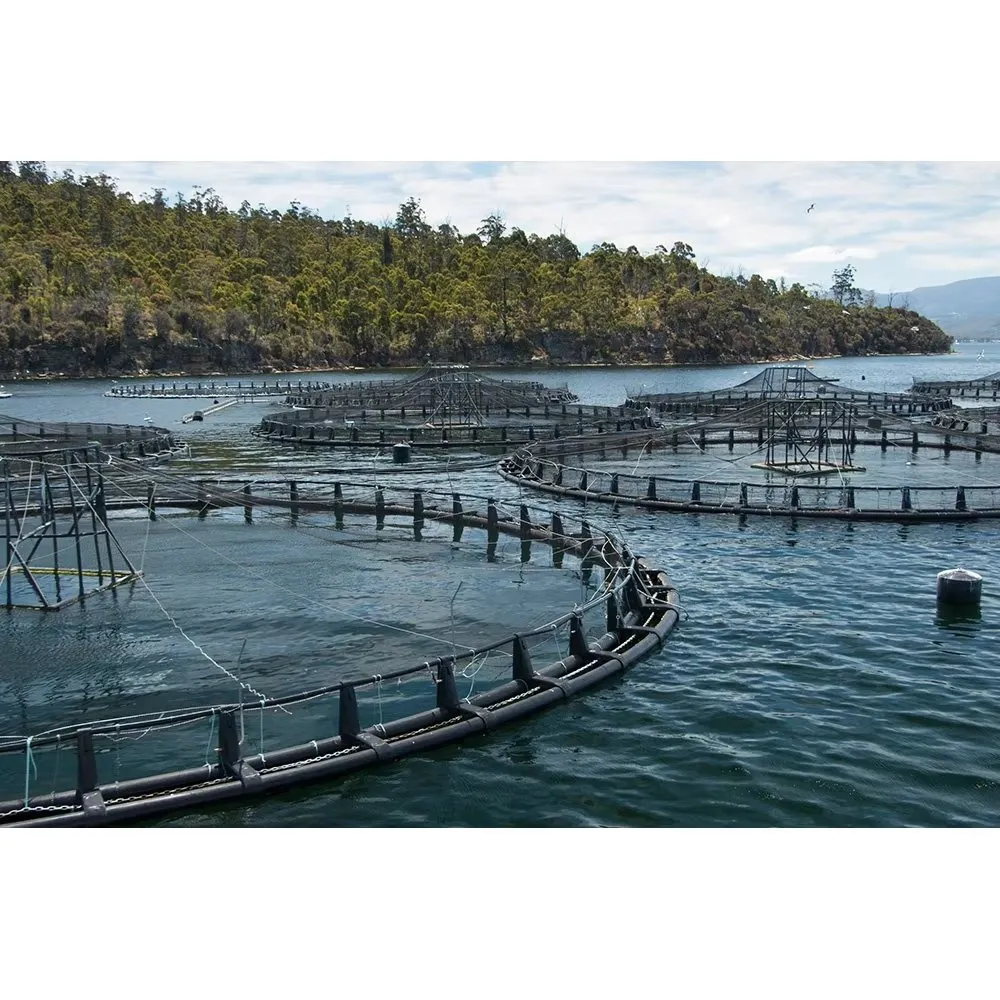
Aquaculture Sea Cage
Floating rings hold large nets that confine thousands of fish in coastal or offshore water; the water passes through, the fish do not leave.
What this is
Floating rings hold large nets in coastal or offshore water, confining thousands of fish in a single pen. Water passes through the mesh; the fish cannot.
Why the system uses it
The cage concentrates feeding, growth, treatment, and harvest into one enclosure in open water. A whole crop is handled as a single unit.
What it costs the animal
Fish are held at densities they cannot escape, and when parasites, disease or poor water quality take hold in a pen there is nowhere inside it to go. Handling, crowding for treatment or harvest, and predators at the net add to it.
Worth being precise about
Density, site, species, monitoring, and regulation vary between farms, and so do the conditions inside the net. Open water does not by itself mean space or health, and fish that escape reach wild populations.
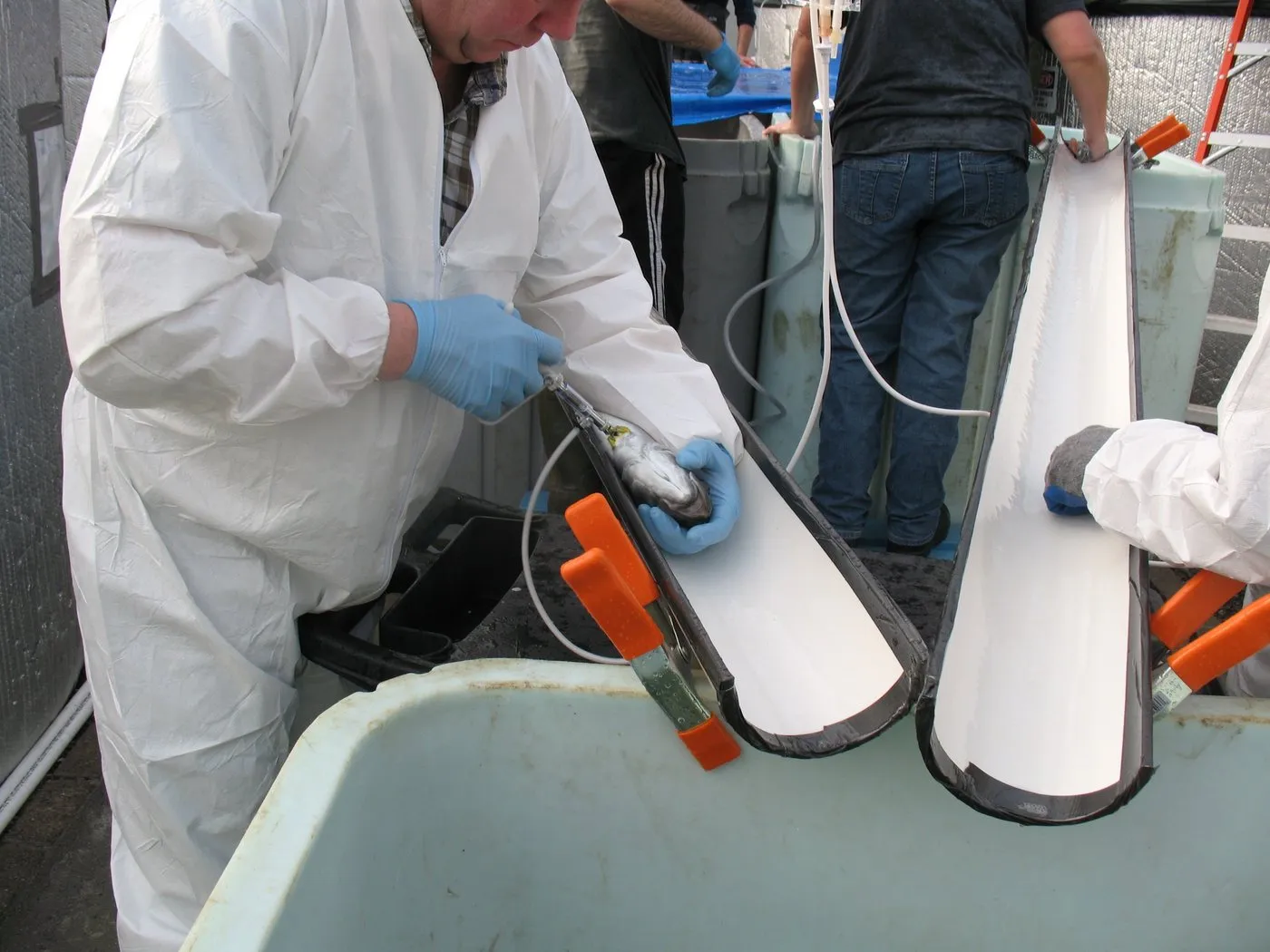
Fish are crowded and briefly handled so vaccines can be injected, sprayed, immersed or given orally, buying fewer outbreaks and less antibiotic use at the cost of capture, air exposure and stress.
What this is
Fish are sorted and briefly handled so a vaccine can be delivered by injection, immersion, spray, or in feed. Parts of the line are automated on some sites.
Why the system uses it
Vaccinating the stock reduces outbreaks in intensive aquaculture and can cut the antibiotics a farm would otherwise use. Here the health purpose and the economics point the same way.
What it costs the animal
The purpose is genuine: a vaccinated fish is less likely to fall sick. Getting the vaccine into it means crowding, capture, time out of the water, sometimes anaesthesia, and a needle, and each of those can stress or injure a fish when handled badly.
Worth being precise about
The photograph shows an active vaccination procedure, not a fully automatic machine. Protocols differ by species, and trained handling is what separates a brief procedure from an injury.
The same net is drawn in to press the fish together before they are removed for transport and slaughter.
What this is
Floating rings hold large nets in coastal or offshore water, confining thousands of fish in a single pen. Water passes through the mesh; the fish cannot.
Why the system uses it
The cage concentrates feeding, growth, treatment, and harvest into one enclosure in open water. A whole crop is handled as a single unit.
What it costs the animal
Fish are held at densities they cannot escape, and when parasites, disease or poor water quality take hold in a pen there is nowhere inside it to go. Handling, crowding for treatment or harvest, and predators at the net add to it.
Worth being precise about
Density, site, species, monitoring, and regulation vary between farms, and so do the conditions inside the net. Open water does not by itself mean space or health, and fish that escape reach wild populations.
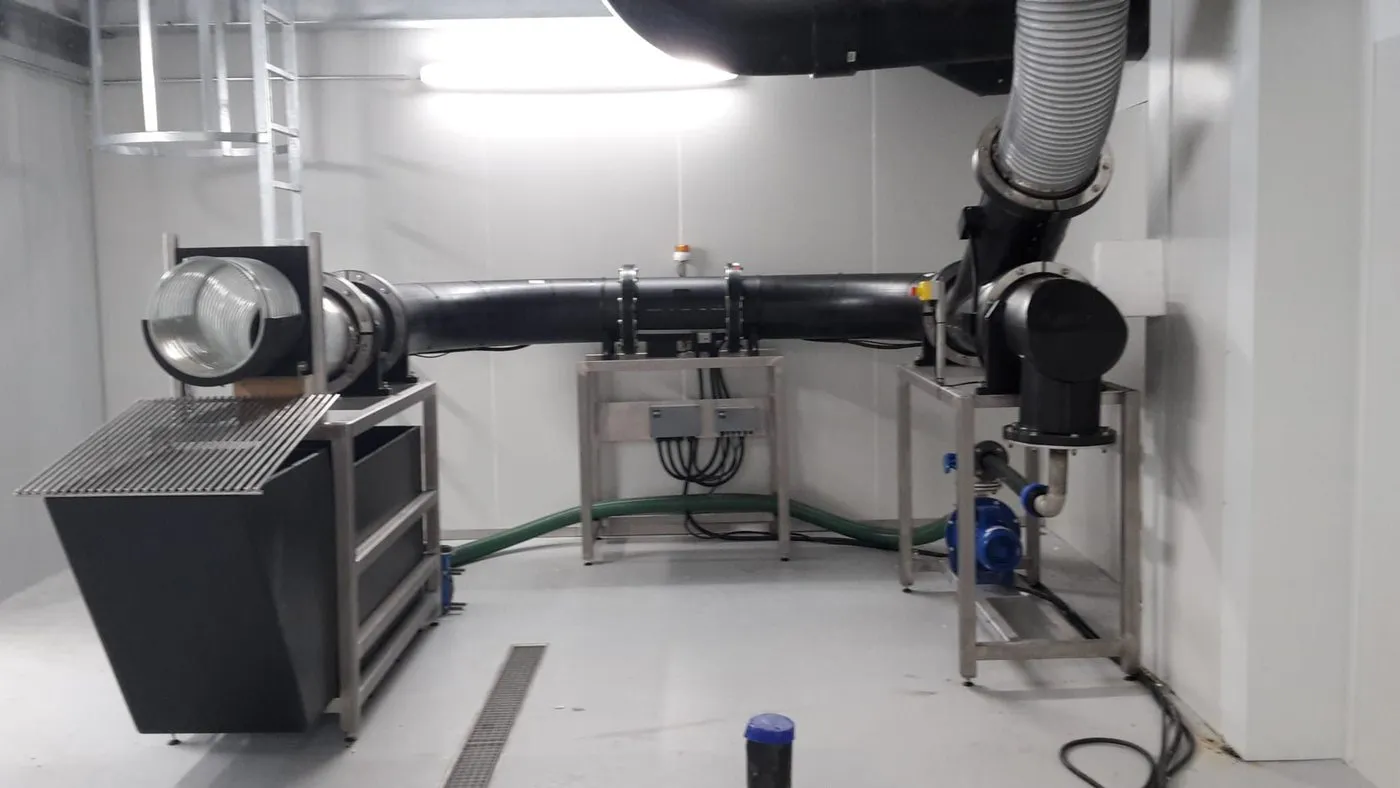
An electrical field is applied in water or immediately after dewatering to induce unconsciousness before the killing step; wrong settings immobilise a fish without making it unconscious.
What this is
A controlled electrical field is passed through the water holding the fish, or applied immediately after they are lifted out. The current is intended to make them unconscious before they are killed.
Why the system uses it
The alternatives in aquaculture slaughter are leaving fish to suffocate in air, chilling them in ice slurry, or killing them by hand. Electrical stunning replaces those.
What it costs the animal
Configured correctly, the equipment makes fish unconscious quickly and improves what happens to them. Configured wrongly, it can immobilise a fish that is still aware, or let one recover — species, size, salinity, current, exposure time, and electrode contact decide which.
Worth being precise about
This counts as a welfare intervention only where the settings have been validated for that species, an effective killing step follows, and the equipment is checked regularly. Without those, the humane claim is untested.
You just walked through 4 stages behind one fillet.
Sea lice, disease, crowding for treatment, and repeated handling define the life. Fish feel pain. The industry's own welfare literature is built on that fact.
Sites, species, stocking density, monitoring and regulation differ substantially. Stunning parameters validated for one species cannot be assumed adequate for another.