Lamb means a young animal. The youth is the product.
One sheep meets several of these tools across a single lifetime, months apart. A ring goes on early, the fleece is taken repeatedly, the flock is driven through chemical baths for parasites, and in some systems the animal is loaded onto a ship bound for a distant market or slaughterhouse. Laid out in sequence, the pattern is how much of that life is spent being processed.
About 5 min · 5 steps · you control the pace
Use ← and → to move, Esc to exit
1 Rings on lambs
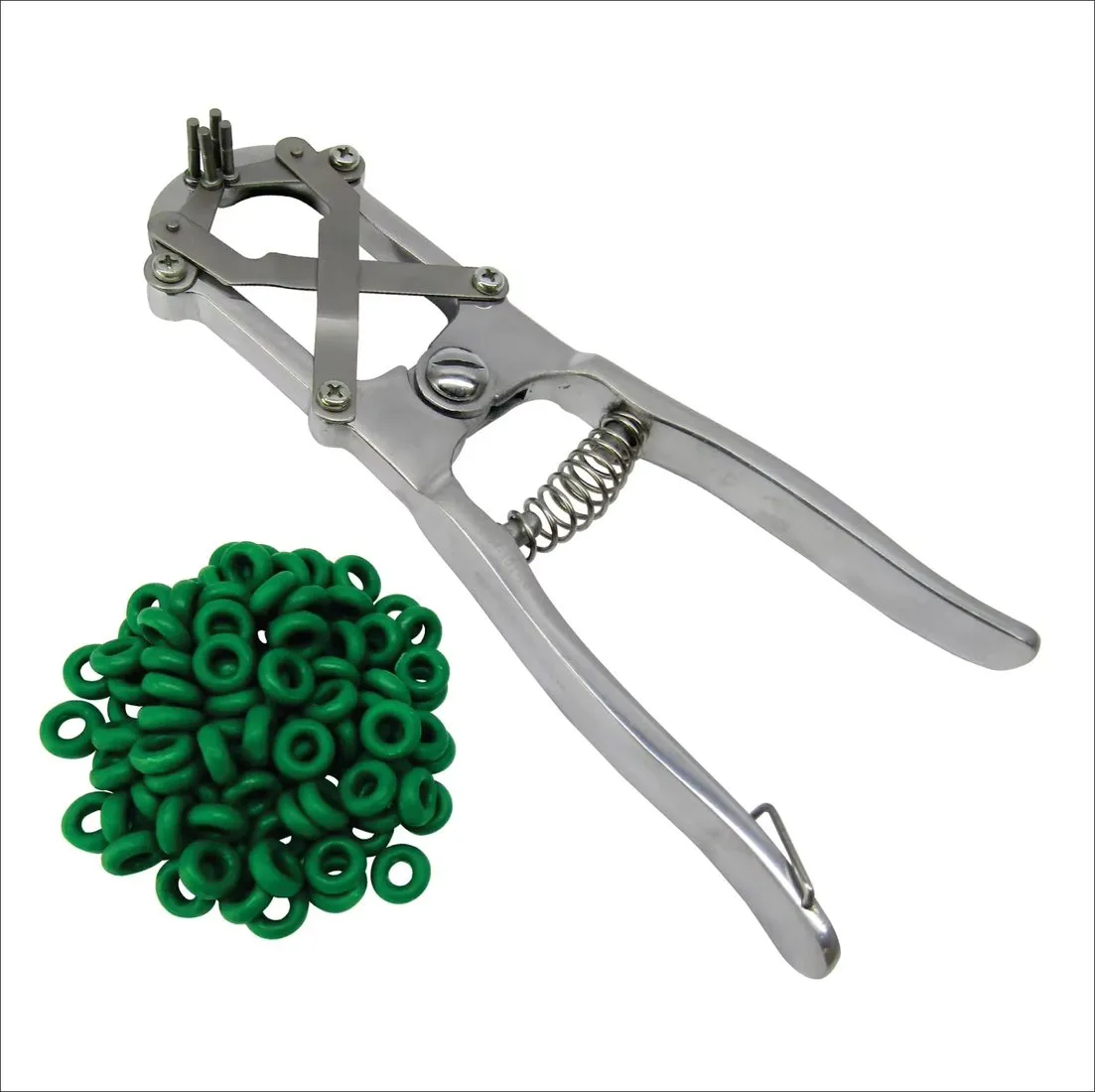
Elastrator / Castration
A tight rubber ring cuts the blood supply to the scrotum or tail; the tissue dies, and pain and swelling build over time.
What this is
Pliers stretch a tight rubber ring over the scrotum or the tail. The ring cuts off the blood supply and the tissue below it dies.
Why the system uses it
The appeal is simplicity: a hand tool, no blade, no bleeding, and no surgical wound to manage afterwards.
What it costs the animal
The tissue dies slowly while the animal is alive to feel it, and pain and swelling build over time. Incorrect placement, older age, infection and no pain relief all make it worse.
Worth being precise about
The tool is simple; the procedure is not painless. Species, age, ring placement, tetanus prevention and analgesia change how much the animal suffers.
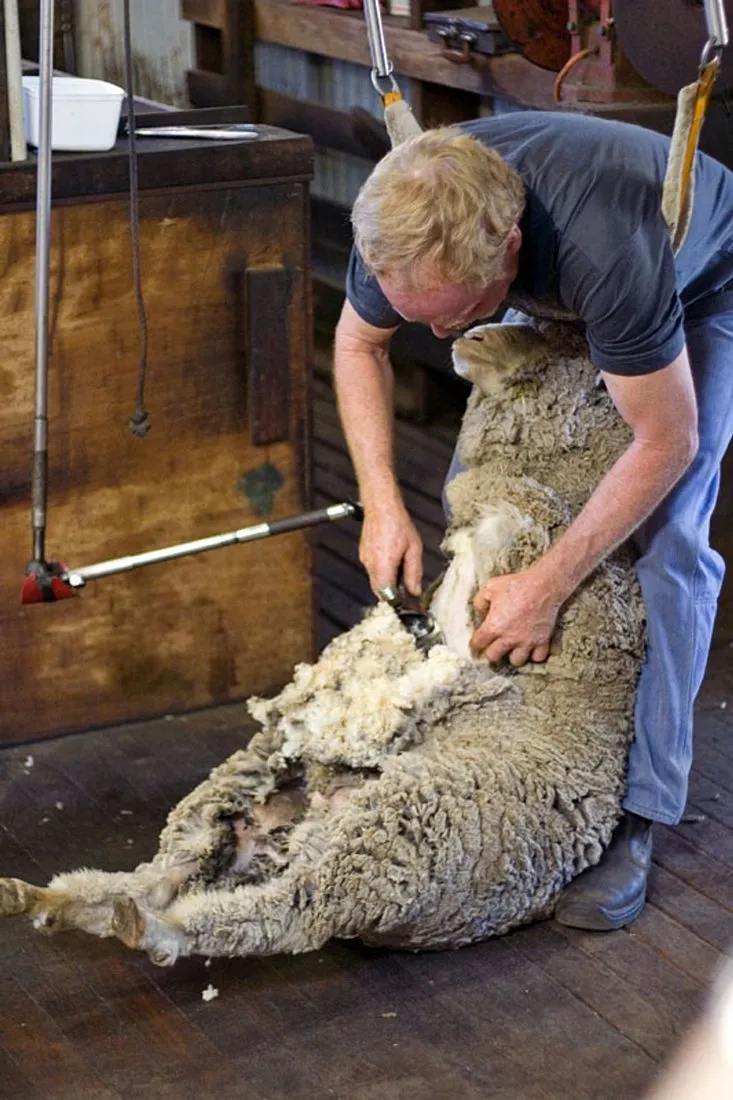
The shearer pins the animal in position while powered handpieces take the fleece off close to the skin, a requirement of breeds selected until they could no longer shed.
What this is
A shearer holds the sheep still with their own body while powered handpieces cut the fleece away close to the skin.
Why the system uses it
Selective breeding has produced wool breeds whose fleece no longer sheds. The sheep cannot shed it herself, so she must be caught and shorn at regular intervals.
What it costs the animal
Being caught, turned, and held still frightens the sheep. Rough restraint, rushed work, and inexperienced cutting open wounds in the skin, and shearing before bad weather leaves her exposed to cold.
Worth being precise about
Shearing is not optional for these breeds: an unshorn wool sheep faces heat stress and flystrike, and the procedure protects against both. Technique, handling, timing, and the breeding choices that created the fleece determine most of the harm.
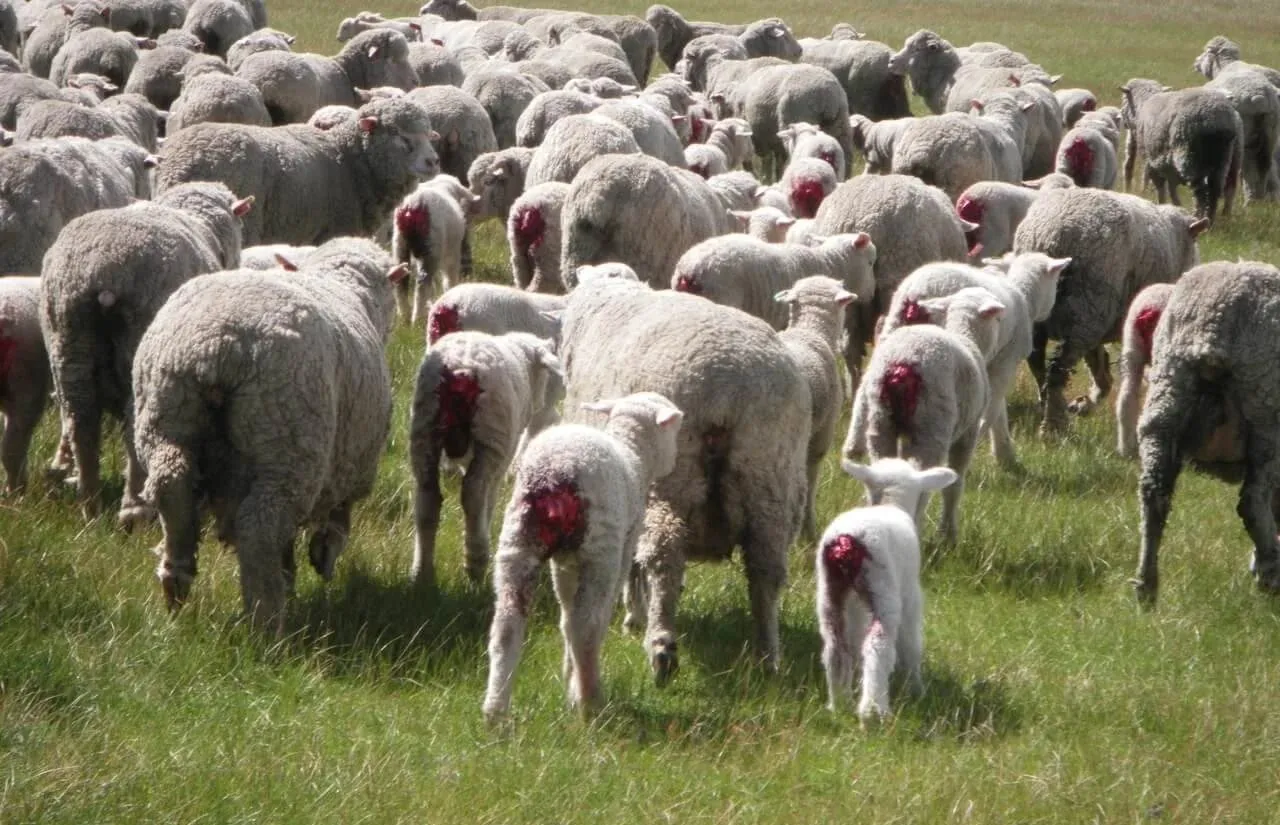
Strips of skin are removed from the breech of selected lambs to reduce the soiling that attracts blowflies, leaving an open wound.
What this is
Strips of skin are cut away from the breech of selected lambs. The aim is an area where urine and faeces no longer collect and attract blowflies.
Why the system uses it
Flystrike is a serious risk in wool flocks. Mulesing is a single cut that reduces it, in place of the repeated monitoring, crutching and shearing that other approaches require.
What it costs the animal
The lamb is left with an open wound and acute pain, and is exposed to bleeding and infection while it heals. Pain relief and wound management reduce the impact; they do not erase it.
Worth being precise about
Flystrike is itself a severe welfare threat, not a commercial inconvenience. Breeding, monitoring, crutching, timely shearing and targeted treatments work as alternatives or as complements.
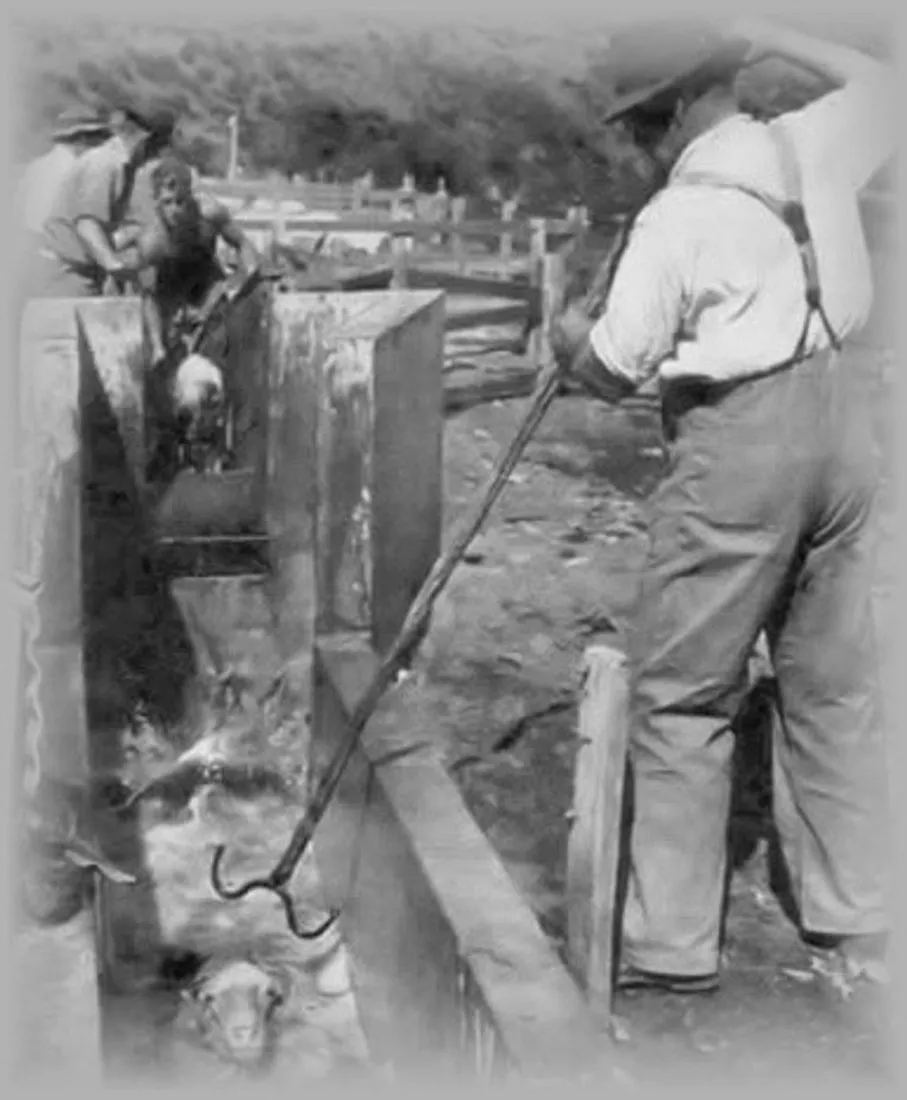
The flock is driven through a plunge bath, shower or spray of parasiticide to stop mites, lice, ticks or scab moving through the whole group.
What this is
Sheep are driven into a bath of pesticide and pushed under, or run through a shower or spray race that soaks the fleece. The chemical kills mites, lice, ticks, and the scab parasite living in the skin.
Why the system uses it
Dipping the whole flock in a single pass stops contagious skin disease moving through the group. One run through the bath treats every animal at once.
What it costs the animal
Being forced under the surface distresses sheep, and rough handling through the race adds to it. Wrong concentration, swallowed fluid, contaminated equipment, or operator error can poison the animals and the people working them.
Worth being precise about
Parasite control has a genuine health purpose, and this is not a procedure without benefit to the animal. What varies between farms is the product, the handling, the protective equipment, the disposal, and whether a vet is involved.
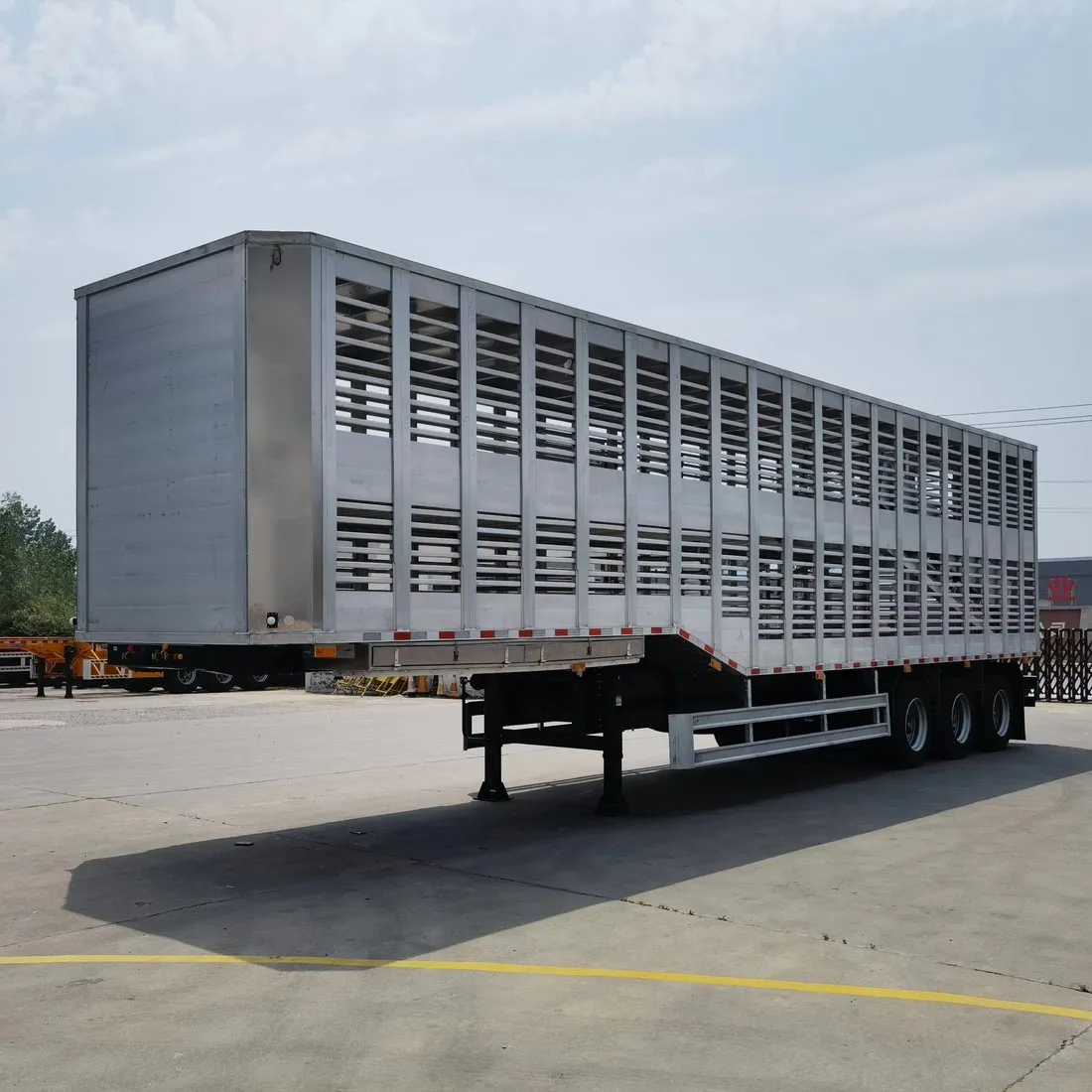
Some sheep leave by sea, where heat, crowding, motion, fatigue, hunger, thirst and delay accumulate across the journey.
What this is
Animals are loaded onto road vehicles and livestock ships and held there for the length of the journey between farms, markets, feedlots, ports, and slaughter destinations.
Why the system uses it
Moving animals alive over long distances lets farms, markets, feedlots, and slaughterhouses in different places operate as one supply chain.
What it costs the animal
Heat, cold, crowding, motion, fatigue, hunger, thirst, injury, and disease compound each other across a journey. On a long or badly run voyage they stack up on the same animal, and every delay extends them.
Worth being precise about
Transport is not automatically abusive, and a short well-run trip is a different thing from a long sea voyage. Journey length, ventilation, stocking density, weather, handling, food, water, and contingency planning decide the outcome.
Before slaughter come rubber rings on tails and testicles, shearing restraint, skin cut from the breech to stop flystrike, chemical dips, and for some, weeks at sea on an export ship.
Climate, breed, flystrike pressure, law and access to veterinary care change what is done. Mulesing is used in some wool systems and not others, and live export applies to some flocks and not all. Parasite control and shearing address genuine health threats.