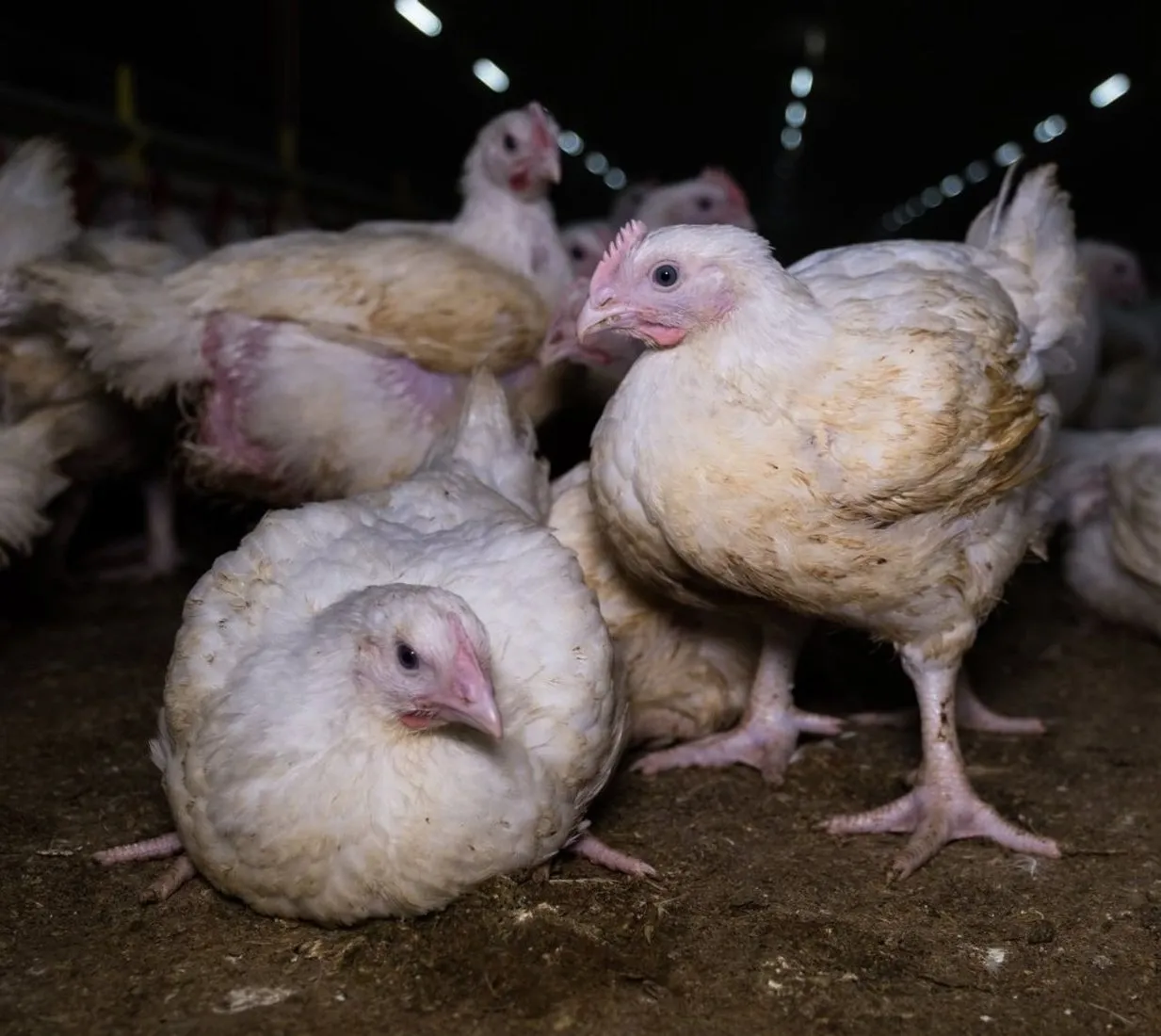
The bird on the plate was a few weeks old. It was bred to grow so fast that its own legs and heart struggle to keep up.
The bird's own body is the first piece of equipment in this chain. Growth is selected in, and then the catching machine, the transport module and the stun line are built to move that body fast and in volume. The damage along the way is not a malfunction of the chain; it is the cost of running it at speed.
About 3 min · 3 steps · you control the pace
Use ← and → to move, Esc to exit
1 Bred to grow fast
Broiler Growth & Breeder Feed Restriction
Meat birds are selected for rapid growth, which brings leg, cardiovascular and mobility problems, while their parents are held on rations deliberately kept below appetite — restriction severe enough, in the harder programmes, to leave them chronically hungry.
What this is
Commercial broilers are bred to gain weight as fast as possible. The parent birds carry the same genetics, so they are held on controlled rations to limit the health and reproductive damage unrestricted growth would cause.
Why the system uses it
One breeding system has to do two jobs: turn out meat birds that reach weight quickly, and keep the parent flock healthy and fertile enough to lay. Restricted feeding is how the second job is made to work.
What it costs the animal
Broilers are grown faster than their legs and hearts can comfortably carry, and leg, cardiovascular, and mobility problems come with it. The parent birds are kept on a ration deliberately held below what they would eat, and where that restriction is severe it means chronic hunger, competition, and frustration.
Worth being precise about
Programmes vary, and precision feeding can reduce the competition; hunger is worst where restriction is most severe. The photograph shows affected commercial birds, because feed restriction leaves nothing visible to photograph.
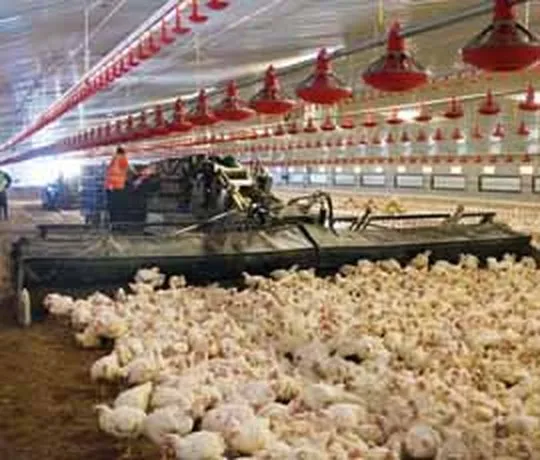
Low conveyors or rotating heads sweep birds off the floor into transport modules; where speed and loading are pushed, that means fear, bruising, fractures and suffocation.
What this is
A machine moves through the shed, sweeping floor-reared chickens onto low conveyors or into rotating collection heads, and feeds them into transport modules.
Why the system uses it
The machine replaces or supplements the crews who catch birds by hand. Emptying a shed before slaughter becomes a mechanical job rather than a labour one.
What it costs the animal
Birds are pushed together ahead of the machine and collide with the gear and with each other on the way into the modules. Fear, bruising, fractures, and suffocation follow when the conveyor runs fast, the machine is poorly maintained, or the loading is rushed.
Worth being precise about
A well-adjusted machine can reduce some of the variability of hand-catching, so this is not automatically worse than a crew. Machine design, flock condition, lighting, operator skill, speed, and loading density in the modules decide the outcome.
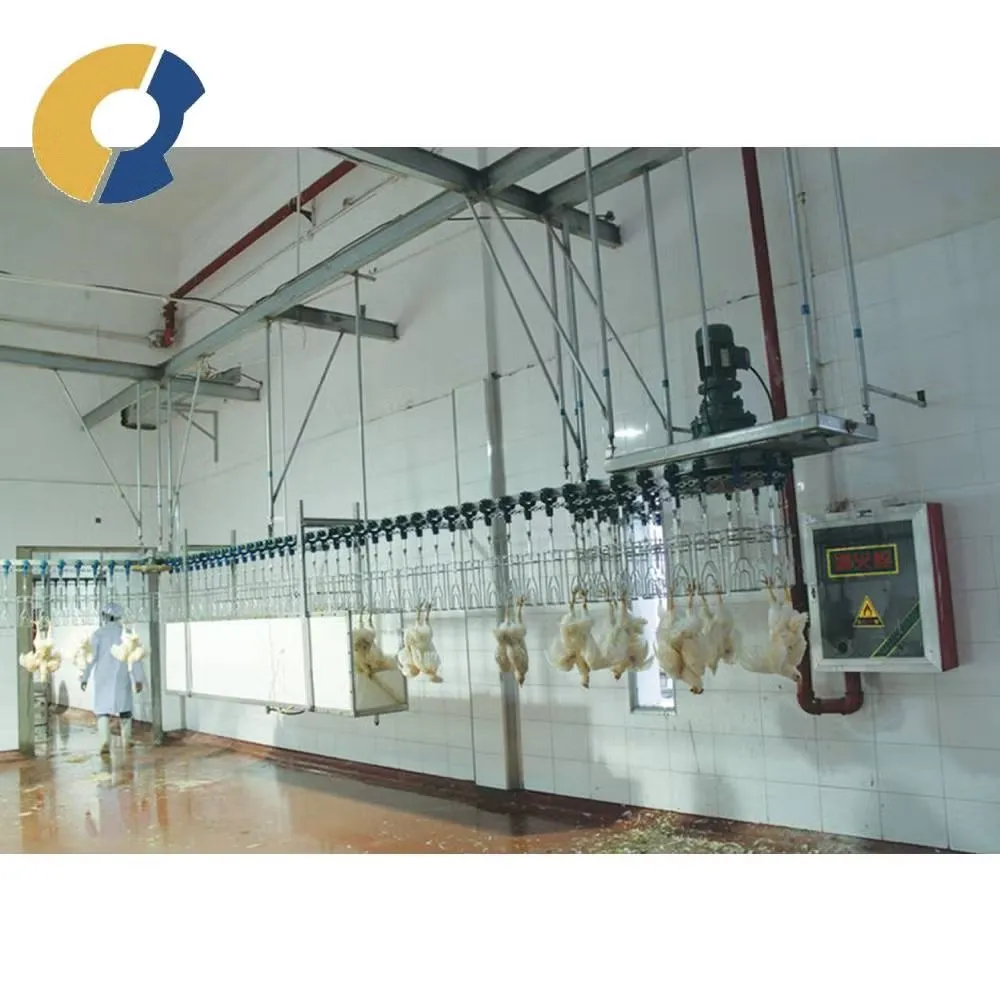
Live birds are hung by the legs and drawn head-first through electrified water, and a bird that takes a pre-stun shock, misses the water or gets too little current reaches the blade conscious.
What this is
Birds are shackled while alive and carried head-first through electrified water. The current is meant to make them unconscious before their necks are cut.
Why the system uses it
One bath stuns bird after bird without stopping the line. It exists so that killing keeps pace with throughput.
What it costs the animal
Being shackled while conscious is frightening and aggravates existing injuries. Birds shocked before the bath, birds that miss the water, and birds that take too little current reach the blade still conscious.
Worth being precise about
Electrical stunning works when every bird is shackled correctly and the current reaches all of them. Settings and line management decide whether that happens, and the failure risks are major.
Fast growth is the product. Lameness, heart failure and chronic hunger in the parent flock are what it costs. Then a machine gathers the birds, a truck moves them, and an electrified water bath meets them at the end.
Machine catching can be less damaging than badly done manual catching. Equipment design, flock condition, lighting, operator skill, pace and loading density decide the outcome. Growth rates, stunning settings and legal standards vary by producer and country.